
5 Tips For Conflict Resolution In The Workplace


What Are The Five 5 Strategies To Resolve Workplace Conflict?
Effectively managing workplace conflict is crucial for creating a positive and productive environment for employees and business owners alike. Unresolved disputes can lead to decreased morale, reduced productivity, and even attrition. Understanding the 5 methods of conflict resolution—also known as the conflict management methods—offers entrepreneurs and small business owners practical tools to address disagreements and maintain a collaborative workplace culture. For small businesses, incorporating professional support like HR consulting can also reduce stressors that often contribute to internal conflict.
5 Tips for Conflict Resolution in the Workplace: Understanding The Five Conflict Strategies
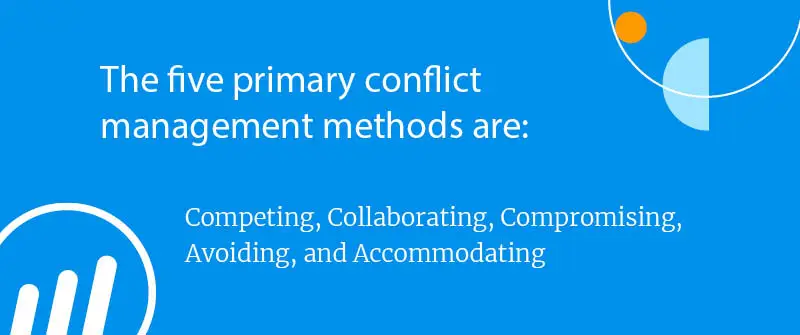
The five primary conflict management methods, also known as conflict management styles, are: competing, collaborating, compromising, avoiding, and accommodating. Each of these conflict strategies offers a different approach to resolving problems and should be chosen depending on the situation.
- Competing: This strategy involves standing firm on your position. This conflict style is for scenarios in which there is a high priority on the goal and low priority on the relationships with others. It’s most effective when quick, decisive action is needed or when unpopular decisions must be made, such as enforcing safety protocols or business policies. However, overuse of the competing style can damage relationships, especially if it disregards the needs of others.
- Collaborating: Taking a problem-solving approach where all parties work together to find a win-win solution. This method is ideal for complex issues where a creative solution is necessary and when relationship matters, as it seeks to address everyone’s concerns and maintain strong connections.
- Compromising: Each party gives up something to reach an acceptable, if not ideal, solution. This strategy is often used when time is limited and a temporary or quick solution is necessary. Compromising often results in neither party being fully satisfied, as both must make concessions.
- Avoiding: Sidestepping or postponing conflict when the issue is trivial, emotions are running high, or more information is needed. Avoiding can be useful in situations where immediate confrontation may exacerbate the problem.
- Accommodating: One party yields to the other’s demands, either to preserve harmony or because the issue matters more to one person than the other. This style involves setting aside your own needs for the sake of harmony. This strategy promotes goodwill but should be used sparingly to avoid resentment.
When Should You Use Each Conflict Resolution Strategy?
The key to successful conflict management is knowing when and how to apply each strategy. For example, use competing when urgent action is needed, collaborating when building consensus is critical and recognizing and valuing different opinions, or compromising when a solution must be reached quickly. Avoiding is best when the issue is minor or you need time to gain perspective, while accommodating can be reserved for moments when preserving relationships is more important than the specific outcome. By matching the right method to the situation and focusing on effective decision making, entrepreneurs can prevent small disagreements from becoming larger issues and promote a healthier, more collaborative workplace atmosphere.
What Are The 5 Cs Of Conflict Resolution?
The 5 Cs of conflict resolution—communication, collaboration, compromise, control, and commitment—are core principles that guide effective conflict management in the workplace. These pillars emphasize the importance of strong communication skills, which are essential for resolving conflicts and fostering collaboration.
They provide entrepreneurs and small business owners with a structured approach to resolving disputes across all types of workplaces, improving relationships, and maintaining a positive work environment with healthy team dynamics and higher employee morale.
By mastering the 5 Cs, you put yourself and your team in a strong position to handle disagreements constructively, support positive team dynamics, and prevent conflicts from escalating and impacting productivity.
Explanation of the 5 Cs: Communication, Collaboration, Compromise, Control, Commitment
Communication is the foundation of all successful conflict resolution. Open, honest, and respectful dialogue allows all parties to express their perspectives and concerns, helping to clear up misunderstandings before they become larger issues. Effective communication also involves active listening and paying attention to nonverbal communication cues, such as body language and tone of voice, which are essential for understanding different perspectives and de-escalating conflicts.
Collaboration follows, encouraging all involved to work together to seek solutions that satisfy everyone’s core interests, while also considering the other party’s needs, rather than approaching conflict as a zero-sum game.
Compromise is about finding middle ground when absolute agreement isn’t possible. It requires flexibility and a willingness to make concessions for the greater good of the team. Control refers to managing your own emotions and reactions during conflict. Staying calm and professional helps to keep discussions constructive and focused on solutions rather than blame. Finally, commitment is the ongoing dedication to follow through on agreed-upon solutions and strategies, ensuring that conflicts do not recur or linger unresolved.
How The 5 Cs Guide Interactions During Workplace Conflict
The 5 C’s act as a compass for navigating workplace disputes. Consistent communication ensures that misunderstandings are minimized, while collaboration builds an atmosphere of trust, partnership, and relationship building. Compromise helps avoid deadlocks and resentment, and emotional control preserves professionalism and respect—since unresolved conflict can make others feel uncomfortable and disrupt the work environment. Most importantly, an ongoing commitment to resolution maintains momentum toward a positive and cooperative workplace culture, emphasizing the importance of maintaining positive relationships.
Examples Of Applying The 5 Cs In Real Situations
For example, if two team members disagree about project priorities, applying the 5 C’s would involve encouraging open communication to clarify their views, collaborating to align on shared goals, and seeking a compromise that addresses both perspectives. Navigating tough conversations is essential in these situations, as it helps manage difficult discussions effectively and prevents escalation. By maintaining control over emotions and a commitment to the company’s mission, leaders can turn conflict into an opportunity for innovation and team growth. With consistency, these principles help ensure conflicts are managed productively and do not hinder your business’s progress.
What Are 5 Ways To Resolve Conflict?
Resolving workplace conflict efficiently is crucial for maintaining a positive working environment, as the ability to resolve conflicts helps ensure ongoing productivity and a healthy workplace culture.
There are several proven approaches that can help entrepreneurs and small business owners manage workplace conflicts and address conflict in the workplace effectively.
By implementing these effective conflict resolution strategies, you can foster collaboration, minimize misunderstandings, and strengthen workplace relationships.
Listen Actively And Empathetically
One of the foundational ways to resolve conflict is to engage in active, empathetic listening. Emotional intelligence plays a key role in this process, as it enables you to recognize and manage your own emotions while understanding and responding to the feelings of others. This means giving your full attention to the speaker, withholding immediate judgment, and showing genuine interest in understanding their perspective. In practice, maintaining open body language, nodding, and paraphrasing what you’ve heard can all demonstrate that you value the other party’s views. For example, if two team members are in disagreement over project priorities, encourage each to share their side without interruption. This approach not only de-escalates tension but often uncovers the underlying causes of the workplace conflict.
Identify And Address The Underlying Issue
Surface disagreements are commonly symptoms of deeper, unaddressed concerns. Take time to ask questions and explore what truly fuels the disagreement—whether it’s a communication breakdown, unclear roles, or differing values. Strong problem solving skills are crucial in this process, as they help identify the root cause and guide the development of effective solutions. By identifying the root cause, you can work towards a sustainable solution rather than a temporary fix. For instance, a recurring issue about missed deadlines may trace back to unrealistic workloads or a lack of clarity in task delegation.
Seek Common Ground And Mutual Interests
Finding points of agreement is essential as you move toward resolving conflict. Encourage all parties to articulate their needs and areas where their interests overlap. When everyone feels their concerns have been acknowledged, it’s easier to negotiate and find a resolution that benefits everyone. To manage conflict effectively, focus on strategies that promote constructive dialogue and prevent escalation. If employees disagree on how to allocate resources, highlighting shared objectives such as project success or client satisfaction can offer a pathway forward.
Remain Respectful And Emotionally Regulated
Emotional regulation and respect are paramount during conflict management at work. Even when discussions become difficult, remind everyone involved to stay courteous, avoid personal attacks, and focus on behaviors and solutions. As a leader, model calmness and patience—your example helps others mirror those qualities. If frustration builds, suggest a short break to allow everyone to collect their thoughts before resuming the conversation.
Involve A Neutral Party If Necessary
When conflict escalates or parties cannot reach a resolution, bringing in a neutral third party, such as a manager, HR representative, HR professional, or external mediator, can help. This person can clarify misunderstandings by engaging all involved parties, keep the dialogue constructive, and provide unbiased guidance. For example, if two department heads are at an impasse over budget allocation, an unbiased leader can facilitate a fair discussion and propose compromises.
It is also important to train managers in conflict resolution skills so they can effectively handle difficult situations and reduce the need for HR involvement.
How To Resolve Conflict At Work Examples
Practical examples illuminate these techniques in action. Consider an instance where two employees contend over project ownership. By listening empathetically to both sides and identifying the root concern—fear of not receiving credit—the manager can propose a collaboration plan that outlines shared recognition, ensuring the conflict is resolved to everyone’s satisfaction.
Alternatively, when a communication breakdown occurs between a remote worker and their supervisor, involving HR can clarify expectations and reestablish effective channels, transforming conflict into an opportunity for improved teamwork. In this scenario, the employee plays a crucial role by openly communicating their concerns and participating in the resolution process.
Using these conflict resolution tips consistently can turn challenges into milestones for growth and trust in your team. Remember, most workplace conflicts arise from misunderstandings rather than intentional actions.
What Are The 5 As Of Conflict Management?
The 5 As of conflict management provide a structured framework to address and resolve disputes in the workplace effectively, and are an essential part of developing a comprehensive conflict management strategy. They guide you through a clear process: awareness, assessment, acceptance, action, and analysis.
By following these steps and applying effective conflict resolution strategies, entrepreneurs and small business owners can create a healthier work environment, prevent escalation, and foster stronger professional relationships. When resolving disputes, it is important to evaluate all options and choose the best alternative to ensure lasting positive outcomes.

What Are The 5 As Of Conflict Management?
Understanding the 5 As of conflict management is essential for resolving disputes constructively. The first A, awareness, emphasizes recognizing that a conflict exists before it festers and grows. Assessment involves evaluating the scope and impact of the conflict, as well as understanding each party’s perspective and the parties involved. Acceptance requires both sides to acknowledge the issue and agree to work towards resolution. Action focuses on developing and implementing a solution together, while analysis means reflecting on what worked and what could be improved the next time conflict arises.
How The 5 As Integrate With Other Conflict Management Steps
While the 5 As offer a streamlined process, they can be effectively paired with widely recognized conflict resolution frameworks, such as the 7 steps in conflict resolution or the 4 steps of conflict resolution. It is important to have a clear conflict resolution process in place, as this helps ensure that all parties understand the steps involved and fosters effective conflict management. For instance, the awareness and assessment stages correspond to the initial identification and diagnosis of a problem, a vital first step in any comprehensive process. Acceptance aligns with openly discussing and agreeing upon the existence of the conflict, an essential component of bringing parties to the negotiation table. Action and Analysis connect seamlessly with solution implementation and post-resolution reflection, ensuring any lessons learned are carried forward.
Tips For Using The 5 As Effectively In The Workplace
To leverage the 5 As effectively, encourage open communication at each phase. Proactively recognizing issues (awareness) can prevent misunderstandings and resentment. It is important to identify behaviors or topics that are off limits, such as inappropriate conduct or discussions, to maintain professional boundaries. Additionally, serious issues like sexual harassment must be addressed immediately, with proper intervention and confidentiality to protect all employees. During the assessment phase, gather insights from all stakeholders to create a clear picture of the situation. Gaining acceptance may require skilled facilitation, ensuring that all parties feel heard and motivated to solve the problem. Collaborative action—with clear, timely steps—maximizes buy-in and the likelihood of sustained change. Finally, a thorough analysis helps you refine and improve your conflict management process for future challenges.
Empowering your organization with a proven conflict management process is key to maintaining a harmonious and productive workplace, while also supporting the well being of your team. Milestone offers personalized support in designing and implementing effective HR solutions—so you can confidently handle workplace challenges and unlock greater business potential. Contact Milestone and let us help you turn conflict management into a strategic strength for your growing business. By mastering these steps, you can become an effective leader whom others trust and follow.
Related Content
What Are Workplace Documentation Best Practices for HR in 2026?
Poor documentation can leave HR teams exposed during disputes, audits, or terminations, turning small issues into costly liabilities. This guide ...

Employee Relations: A Guide For HR Professionals
HR professionals often juggle conflicts, morale issues, and compliance concerns all at once, with little room for error. This guide ...

An HR Professional’s Guide To Corrective Action In The Workplace
Addressing employee performance or conduct issues without a clear process can lead to inconsistency and legal risk. This guide walks ...


Stay in the know