
IRS Form 8832: How To Fill It Out And When To File It


What Is IRS Form 8832, And Who Should File It?
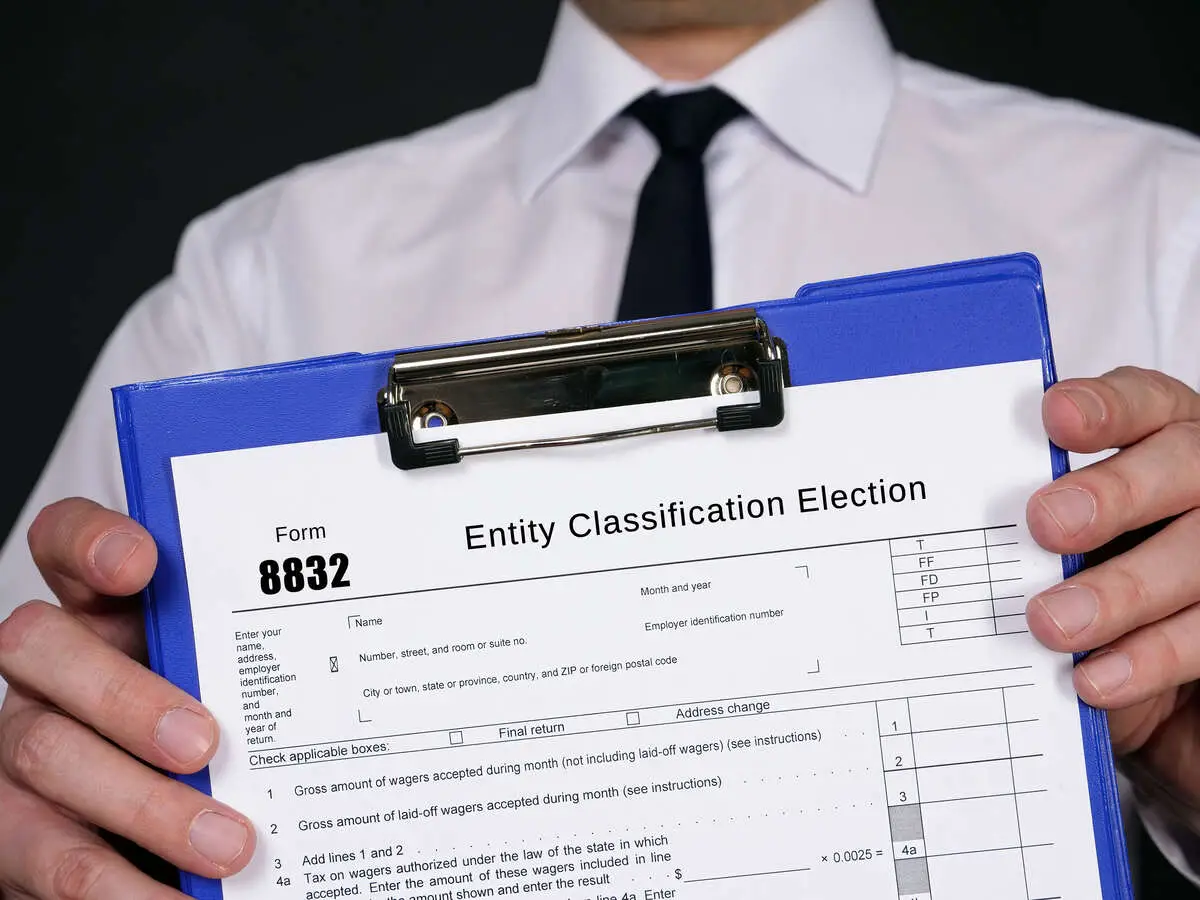
IRS Form 8832, titled Entity Classification Election, enables businesses—primarily limited liability companies (LLCs) and certain other eligible entities—to choose how they are treated for federal tax purposes. This choice can have significant implications for your business’s tax obligations and financial reporting. Electing an entity classification is especially important for organizations seeking the most advantageous tax treatment or preparing for growth, partnerships, or investment. Working with professionals who offer tax accounting services can simplify the filing process and help ensure the election aligns with your long-term financial strategy.
What Is IRS Form 8832?
Form 8832 allows eligible business entities to change their federal tax classification, commonly referred to as “checking the box.” By default, domestic LLCs with more than one member are classified as partnerships, while single-member LLCs are disregarded entities (taxed as sole proprietorships). However, by filing Form 8832, these entities can elect to be taxed as corporations (either C corporations or, if meeting eligibility, S corporations via a separate form). This flexibility can help business owners and nonprofit leaders align their tax structure with strategic goals, such as attracting investors or streamlining operations.
Who Should File Form 8832?
Any eligible business entity wanting a different tax status than its default IRS classification should consider filing Form 8832. This form is particularly relevant to LLCs—both single-member and multi-member—as well as partnerships and certain foreign organizations operating in the U.S. For example, newly formed LLCs might file Form 8832 if their business plans require corporate taxation, while partnerships may seek to avoid partnership status for various strategic reasons. It’s also vital for organizations with changing ownership structures or plans for significant capitalization. Entrepreneurs and nonprofit leaders should evaluate if filing offers operational or tax benefits aligned with their mission’s long-term sustainability.
How Does Form 8832 Apply To A Single-Member LLC?
A single-member LLC (SMLLC) is, by default, treated as a disregarded entity for tax purposes—meaning its income and expenses are reported directly on the owner’s personal tax return. However, a single-member LLC has the option, via Form 8832, to elect taxation as a corporation. This election can provide liability protection and potential tax planning advantages, especially in cases where personal tax rates would otherwise be higher or where the owner is seeking to raise capital and issue shares. For nonprofit organizations with affiliated business ventures, this classification can help clarify the separation between charitable activities and unrelated business income for compliance and reporting purposes.
Why And When Might An LLC Want To Change Its Tax Classification?
LLCs may seek a new tax classification for several reasons: reducing self-employment taxes, preparing for outside investment, forming integral partnerships, or complying with grant or funding requirements (especially for nonprofit organizations). Changing to a corporate status via Form 8832 can also simplify ownership changes and support growth strategies. However, switching classifications can have long-term tax consequences and must be carefully timed and documented according to Form 8832 instructions and IRS regulations. Consulting with a professional or nonprofit advisor is advisable before making an election.
Types Of Entities Eligible To File
Form 8832 may be filed by domestic and foreign eligible entities. In addition to LLCs, certain partnerships, non-corporate foreign entities operating in the U.S., and even some nonprofit organizations with taxable subsidiaries or for-profit branches may use Form 8832. This underscores the form’s importance as a strategic tool for organizational flexibility and optimal tax planning.
When To File Form 8832 And Understanding Late Election Relief
Understanding the optimal timing for filing Form 8832 is crucial for entrepreneurs and nonprofit organizations seeking to maximize tax advantages and ensure compliance with IRS regulations. Ideally, you should file Form 8832 before you want your new tax classification to take effect. Filing deadlines can significantly impact your entity’s tax filings for the current and future years, and missing the window may limit your options without additional steps. If you do not meet the required deadline, the IRS offers late election relief under certain circumstances, but navigating this process requires careful attention to eligibility rules and supporting documentation.
When Should You File Form 8832?
Form 8832 should be filed either when forming a business entity that wants an initial classification different from its default or whenever an existing eligible entity wishes to change its tax status. The standard recommendation is to file Form 8832 as soon as your organization determines a need for a new tax classification, ensuring the election date aligns with your fiscal and tax planning. The IRS allows you to specify an effective date for your election, but this date cannot be more than 75 days prior to the date you file the form and no more than 12 months after you file. Filing proactively allows your business or nonprofit to avoid tax ambiguity and be well-positioned for growth or compliance initiatives. Consulting with an IRS tax specialist can help clarify timing, ensure accuracy, and avoid delays or costly errors.
Timely filing is especially important for new businesses that need their tax status clarified in the first year of operations. For established entities, consider tax planning implications, coordination with other IRS filings, and the potential effect of the classification change on stakeholders and funding sources. Always document your rationale and communicate changes with your partners, board, or advisors before submission.
What Is Form 8832 Late Election Relief?
Late election relief for Form 8832 is an IRS provision that allows businesses and nonprofits to request retroactive approval of their entity classification change when a valid election was not made on time due to reasonable cause. To qualify, you must demonstrate that actions taken by your organization and its stakeholders from the intended effective date are consistent with the requested classification, and you must provide a detailed written explanation describing why the filing deadline was missed. Eligible filers generally must not have previously obtained late election relief in the past five years.
The process for late election relief is rigorous, requiring you to attach the relief request to Form 8832 and submit it to the IRS with supporting documentation. The IRS reviews your explanation, supporting facts, and consistency of your business actions before approving or denying the relief. Engaging a knowledgeable tax advisor or legal counsel is recommended to improve your chances of a successful late election if necessary.
What Are The Consequences Of Missing The Filing Deadline?
If you miss the deadline to file Form 8832, your entity’s default or previously elected tax classification remains in effect, potentially leading to unexpected tax liability, reporting complications, or lost tax planning opportunities. This can affect eligibility for certain grants, investments, or nonprofit status, so it’s imperative to monitor filing deadlines closely and pursue late election relief when authorized by the IRS. Proactive planning and organizational communication are essential to avoid these potentially costly missteps.
Conclusion: Key Takeaways On IRS Form 8832
Successfully navigating IRS Form 8832 is critical for entrepreneurs and nonprofit organizations looking to optimize their tax strategy and ensure compliance with federal requirements. Making the right entity classification election can affect both your operational flexibility and your tax liabilities, so it’s crucial to approach this process methodically and with a clear understanding of your organization’s current and future needs. Whether you are running a single-member LLC considering corporate tax treatment or a multi-member entity weighing your options, the decisions made through Form 8832 have significant and lasting consequences.
Before submitting your election, pause to conduct a thorough review. Here’s a simplified checklist:
Review the official Form 8832 instructions provided by the IRS. These offer essential guidance on eligibility, deadlines, and how to avoid common errors.
Confirm your entity’s EIN and legal status, ensuring your business or nonprofit is eligible to file.
Evaluate the tax implications of each classification. Consult advisory professionals if needed to align the election with your long-term goals.
Double-check all information on your Form 8832 for accuracy, signatures, and proper dating.
Keep a copy of the completed form and all related correspondence for your records.
Entrepreneurs and nonprofit leaders should also stay connected to ongoing resources. The IRS website supplies up-to-date forms and instructions, while industry peers and advisors can offer hands-on experience and practical tips from their own entity classification journeys.
Ultimately, the correct and timely filing of Form 8832 can position your organization for clarity and confidence in your tax affairs, empowering you to focus on growth, innovation, and mission-driven impact. If you’re seeking support to streamline your business entity filing and back office management, Milestone is your trusted partner. Ready to simplify compliance and unlock new efficiencies? Engage with Milestone’s tailored accounting and advisory solutions today—Contact us today and let us help advance your organization’s goals from the back office forward.
Related Content

Medical Practice Accounting
Medical practice accounting involves dealing with the unique financial challenges and compliance requirements of healthcare entities.

The Complete Guide to Accounting for Optometrists: Methods, Taxes, and Practice Financials
Most optometrists go to school to treat patients, not to run a business, but understanding the accounting methods, tax deductions, ...

Debits vs. Credits: A Plain-English Guide for Business Owners
If you learned about debits and credits from your bank account, accounting is about to flip everything you thought you ...


Stay in the know