


What Is Tax Form 1120?
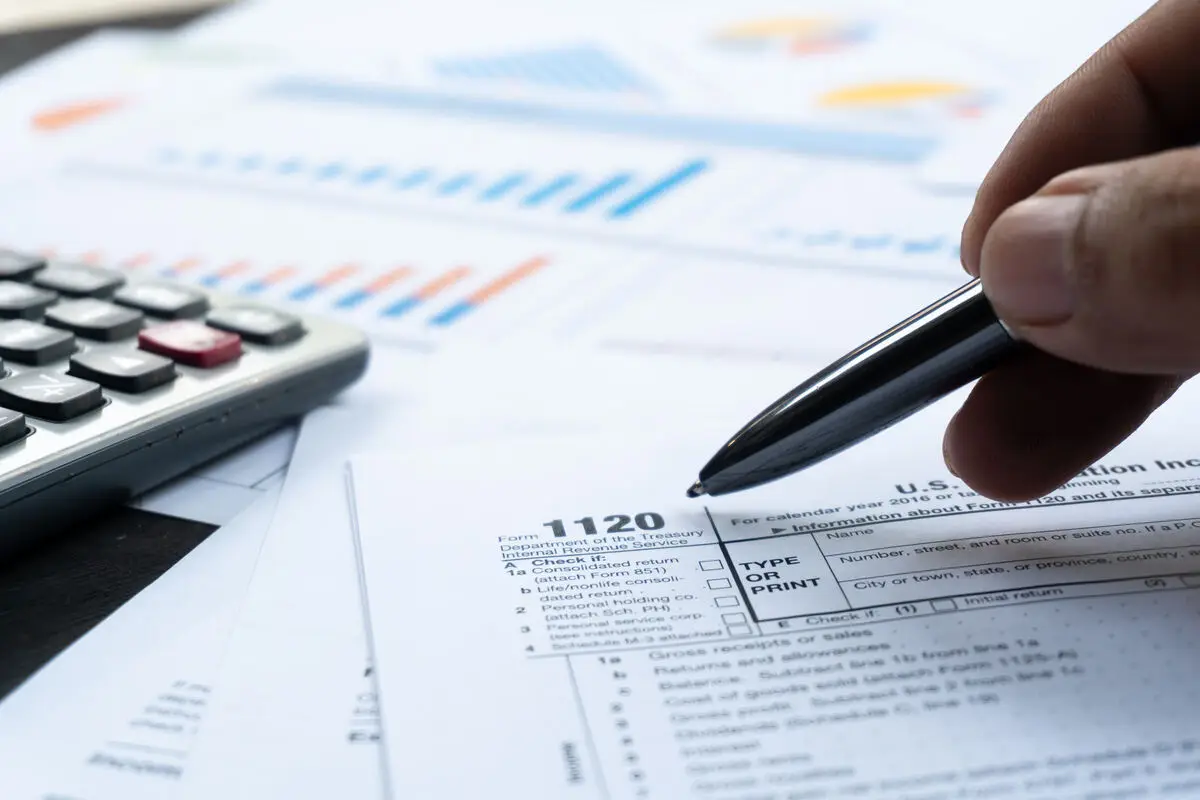
IRS Form 1120 is the U.S. Corporation Income Tax Return, required by law for all domestic C corporations to report their income, gains, losses, deductions, and credits to the Internal Revenue Service (IRS) each tax year. The core purpose of Form 1120 is to calculate the corporation’s federal income tax liability based on its financial activities throughout the year. Whether you’re operating a small, privately held company or a rapidly scaling enterprise, if your business is structured as a C corporation, you’ll need to file Form 1120 annually to remain in good standing with the IRS. Businesses often rely on professional tax accounting services to simplify this process and reduce the risk of errors.
Using this form helps businesses remain compliant with federal corporate tax rules, avoiding costly mistakes and penalties associated with missed filings or underreporting. It serves as a comprehensive record of your business’s financial health – reporting everything from revenue and cost of goods sold to allowable deductions, credits, and tax payments. With the changing tax landscape and evolving regulations, especially over the past few years, it’s essential to reference the latest Form 1120 instructions, such as the most current Form 1120 instructions 2023, to ensure you’re providing accurate and complete information. These instructions clarify changes for the current tax year, itemized requirements, and additional forms or schedules that might apply to your business.
If you’re looking for straightforward answers, communities like those on Reddit or expert business forums can provide real-world experiences, but always cross-reference advice with official IRS guidelines and your professional advisors. For those filing for the 2022 tax year or earlier, prior-year forms and instruction PDFs are available on the IRS website. The essential information you’ll need to report includes the company’s identifying details, gross receipts, operating expenses, deductions, tax credits, and the final calculation of any tax due or overpayment for the year.
Keeping up with the latest Form 1120 2023 and ensuring you’re using the official Form 1120 PDF are basic but critical steps. By starting with a clear understanding of what IRS Form 1120 is and who must file it, small and medium-sized business leaders can set the foundation for smarter, more confident annual tax compliance strategies—one of the keys to scalable and sustainable business growth.
Who Needs To Use Form 1120?
Any business classified as a C corporation in the United States is required to file Form 1120 annually, regardless of business size or profitability. That includes companies incorporated domestically and certain foreign corporations conducting business within the U.S. In cases where a business entity has elected to be taxed as a C corporation, such as some LLCs, the same filing rule applies. Understanding if and when to file protects your business from unwanted tax surprises and maintains your credibility with the IRS.
What Information Is Reported On Form 1120?
Form 1120 is more than just a tax return–it’s a structured snapshot of your company’s financial picture. You’ll report gross income, deductions for operating expenses, compensation, rent, depreciation, and interest, as well as details for available tax credits. Supporting schedules and statements may be required for detailed breakdowns, so ensure financial records align with reporting requirements. Reviewing up-to-date Form 1120 instructions annually helps identify any new lines, schedules, or compliance updates for your filing year.
Who Must File Form 1120 (And Who Is Exempt)?
Form 1120 is required for most U.S. businesses operating as C corporations, but not every business entity is obligated to file it. Knowing exactly who must file—and who is exempt—empowers entrepreneurs and business leaders to manage corporate compliance and avoid unnecessary stress at tax time. Typically, traditional corporations (C corps) and some LLCs that elect corporate taxation use Form 1120 to report taxable income, gains, losses, deductions, and credits to the IRS. Other business structures may have different reporting requirements, so understanding these distinctions is critical for both new and established companies.
Who Is Not Required To File Form 1120?
Most notably, business entities such as S corporations, partnerships, and sole proprietors are generally not required to file Form 1120. Instead, S corporations file Form 1120-S, partnerships file Form 1065, and sole proprietors report business income via Schedule C on their individual Form 1040. Additionally, certain nonprofits (recognized under IRC Section 501(c)) are exempt and instead file Form 990. For those operating an LLC, it’s crucial to note that unless the LLC has elected to be taxed as a corporation, it will not file Form 1120. Misclassifying your business entity can lead to missed deadlines or unnecessary paperwork, so always verify your entity type before filing.
Who Fills Out A Form 1120?
Typically, Form 1120 is completed by a company’s owner, a qualified corporate officer (such as the president or treasurer), or more commonly, a certified public accountant (CPA) or tax advisor. Many businesses—especially those experiencing rapid growth or with complex operations—choose to partner with outsourced accounting providers like Milestone. These professionals ensure that all tax obligations are met accurately and on time, help interpret complicated IRS requirements, and pause to review relevant supporting documents for completeness. Leveraging expert guidance can save you time, reduce the risk of errors, and allow your internal team to focus on core business operations.
What Types Of Entities Are Required To File Form 1120?
All corporations organized in the United States—excluding S corporations—are required to file Form 1120, including those with no taxable income or those in their first year of operation. Certain LLCs that have elected corporate taxation must also complete this filing every year. Even foreign corporations engaged in business within the U.S. might need to file under specific circumstances. Because the stakes are high, reviewing your company’s formation documents and previous filings, or consulting with a professional, is highly recommended each tax season.
How Does Milestone Support Proper Form Filing And Compliance?
At Milestone, our goal is to give business leaders peace of mind by making corporate compliance seamless. We assess your business entity structure, walk you through documentation requirements, and equip you with best practices to avoid costly errors. Our team manages the whole Form 1120 process—from information gathering to submission—so you can spend less time worrying about taxes and more time focusing on growth. By staying current with IRS updates and leveraging technology, Milestone ensures your filings are accurate and timely—every year.
How To File Form 1120: Step-By-Step
Filing Form 1120 is a critical annual task that ensures your corporation meets its federal tax obligations and maintains good standing with the IRS. There are several steps to successfully filing this form, whether you choose paper or online submission. Understanding the process and key deadlines, collecting the right documentation, and ensuring accuracy are essential to keeping your business on track and compliant. Leveraging resources like the Form 1120 instructions 2023 and expert guidance from partners like Milestone can help demystify this often-complex task.
When Is Form 1120 Due Each Year?
The IRS requires most calendar-year C corporations to file Form 1120 by the 15th day of the fourth month after the end of their tax year—typically April 15. If your corporation operates on a fiscal year, the deadline shifts accordingly. Missing this date can trigger late filing penalties, making a clear timeline and proactive planning essential for business tax compliance.
Where Do You Find Form 1120 And The Latest Instructions?
You can access the official Form 1120 PDF and the most recent Form 1120 instructions directly from the IRS website. These resources provide comprehensive guidance on completing the form, reporting income, and understanding eligible deductions and credits. Be sure to use the latest version (for the 2023 tax year, reference the Form 1120 instructions 2023), as requirements and schedules may change from year to year.
What Are The Steps To Completing Form 1120?
Start by gathering all relevant documentation: financial statements, prior year tax returns, lists of deductions and credits, payroll tax forms, and information on federal tax payments already made. Next, complete the core sections of Form 1120:
- Income: Report gross receipts, sales, and any other income sources.
- Deductions: List allowable business expenses, including salaries, rent, and cost of goods sold.
- Tax computation and payments: Calculate taxable income, total tax owed, and note payments or credits applied during the year.
Double-check for accuracy to minimize audit risk and avoid delays or costly corrections.
How Do You File Form 1120 Online Or By Mail?
Form 1120 online filing is encouraged by the IRS for speed, tracking, and security. Several IRS-approved e-file providers and tax software solutions allow you to submit electronically, which also expedites your refund or acknowledgement. Alternatively, you can print and mail the completed Form 1120 PDF to the IRS, but keep in mind this method may result in longer processing times.
Tips For An Efficient Corporate Tax Return Process
Maintain organized, up-to-date records throughout the year, and consider implementing digital document management systems for easy access. Scheduling a mid-year check-in with your accounting advisor can help you spot issues before the filing deadline. And always retain copies of your submitted form and supporting documentation in case of IRS questions or audits.
How Milestone Streamlines The 1120 Filing Process For Growing Businesses
At Milestone, we understand that corporate tax return process requirements can pull you away from your core business goals. That’s why our experienced accounting team handles the entire business tax compliance process—from gathering documentation and filling out Form 1120 to managing e-file submission and responding to any IRS correspondence on your behalf. By partnering with Milestone, you gain peace of mind and more time to focus on growth and innovation, knowing your compliance is expertly managed. Reach out to Milestone today to simplify your annual filings and let us handle the complexity of corporate tax compliance for you.
Common Questions About Form 1120 Costs, Penalties, And Compliance
How Much Does It Cost To File 1120?
Filing Form 1120 for your C corporation involves a range of potential costs, influenced by your business’s complexity, approach to preparation, and whether you engage professional help. Do-it-yourself (DIY) tax preparation using IRS resources may only incur nominal fees, while hiring a certified public accountant (CPA) or a reputable accounting firm can range from several hundred to several thousand dollars—especially for companies with more intricate financials. It’s important to weigh these costs against the benefits of accuracy and risk mitigation, particularly as your organization scales.
For entrepreneurs and business leaders, initial savings from self-preparation often don’t outweigh the value a professional can provide. CPAs or specialized partners deeply familiar with corporate tax filing not only help maximize lawful deductions and manage complex compliance requirements but also alleviate the stress of unknowns. For smaller corporations with straightforward finances, a basic CPA filing could be between $700 and $1,000. However, businesses handling multiple revenue streams, significant deductions, or foreign assets may find fees in the $1,500 to $5,000+ range. Online services also exist as a middle-ground, offering price points and expertise between DIY and full-scale CPA engagement.
Ultimately, the most crucial business cost to consider is the potential penalty for errors or overlooked deductions. That’s where accounting partners like Milestone deliver measurable value—combining proactive compliance monitoring with tailored advisory to not only comply but to optimize your organization’s tax posture.
What Happens If I Don’t File Form 1120?
Failing to file Form 1120 by the designated annual deadline—usually the 15th day of the fourth month after your fiscal year ends—can result in significant penalties and mounting interest charges on any unpaid tax liability. The IRS typically charges a monthly penalty of 5% of the unpaid tax per month (up to a maximum of 25%) for failing to file, in addition to interest on the outstanding balance. Even if you believe your corporation has no taxable income or owes no tax, the filing requirement remains, and non-compliance exposes your business to unnecessary financial and administrative hardship.
Beyond immediate late-filing penalties, repeated or serious non-compliance raises red flags with the IRS, potentially triggering audits. Audits consume time, distract from core operations, and can uncover further liabilities or errors from previous tax years. Persistent failure to file or pay can lead to more severe consequences, including the assessment of additional penalties, levy actions, or even the administrative dissolution of your corporation. All this underscores the critical importance of timely and accurate corporate compliance with IRS requirements.
How Can I Avoid Penalties And Ensure Ongoing Compliance?
Staying compliant means more than meeting deadlines. You must keep organized records, track regulatory changes, and accurately report all necessary data. Business leaders should establish systematic processes for compiling financial documentation and monitoring key due dates. Consider investing in accounting software or delegating oversight to dedicated finance professionals or trusted third parties.
For growing businesses, a strategic partnership with a professional firm like Milestone takes compliance assurance even further. Our experts stay abreast of evolving tax laws and deadlines, proactively guide you in gathering documentation, and review each submission to ensure total accuracy—minimizing risk and shielding your business from avoidable financial setbacks.
Ready to elevate your tax strategy, minimize stress, and protect your business from costly tax surprises? Reach out to Milestone—your ally in corporate compliance and tax efficiency. Our integrated team delivers tailored tax, accounting, and CFO solutions so you can focus on expanding your business vision with confidence. Experience peace of mind and strategic clarity by letting Milestone handle your next Form 1120 filing and beyond.
Related Content

Medical Practice Accounting
Medical practice accounting involves dealing with the unique financial challenges and compliance requirements of healthcare entities.

The Complete Guide to Accounting for Optometrists: Methods, Taxes, and Practice Financials
Most optometrists go to school to treat patients, not to run a business, but understanding the accounting methods, tax deductions, ...

Debits vs. Credits: A Plain-English Guide for Business Owners
If you learned about debits and credits from your bank account, accounting is about to flip everything you thought you ...


Stay in the know