
What Small Business Owners Need to Know About Form W-9: What It Is and How to File It
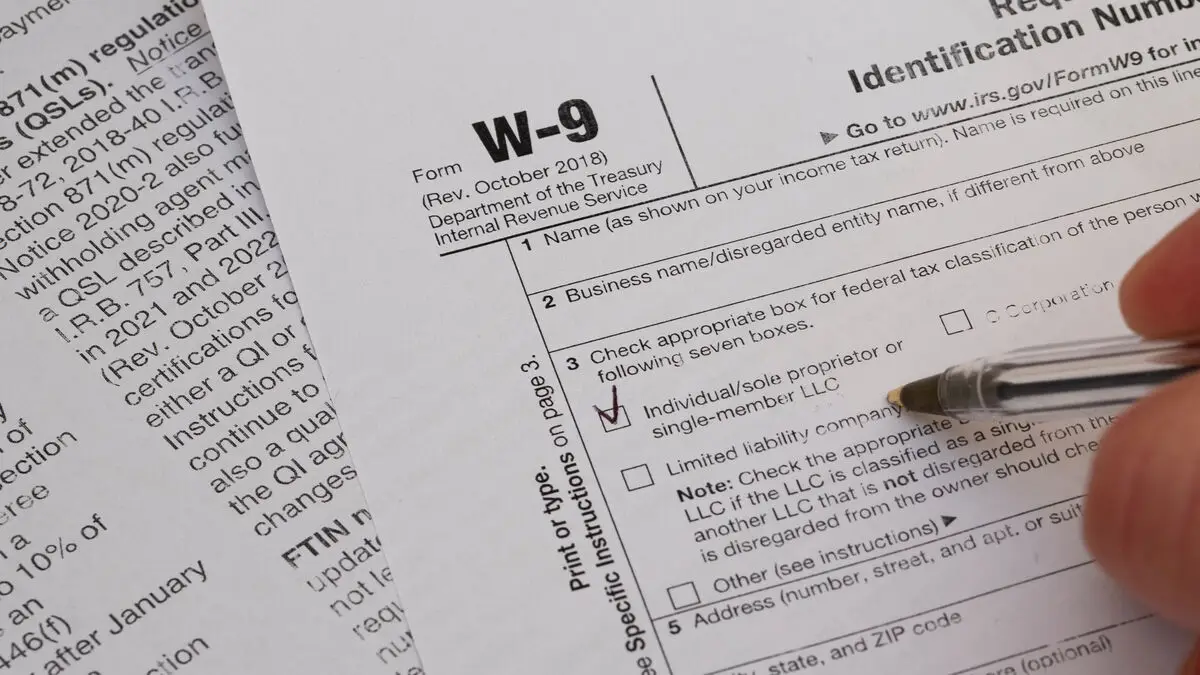


Understanding Form W-9 is essential for any business owner who works with contractors, freelancers, or vendors. This straightforward guide covers when you need a W-9, how to fill one out correctly, and what it means for your tax obligations. Relying on professional Tax Accounting Services can also help ensure accuracy and compliance when managing these forms. Let’s break down everything you need to know to stay compliant and avoid penalties.
What Is Form W-9 and When Is It Required?
W-9 form, officially known as the IRS Request for Taxpayer Identification Number and Certification, collects taxpayer information from independent contractors, freelancers, and vendors. When you hire non-employee service providers, you’ll request a W-9 so you can properly report payments to the IRS by issuing a Form 1099 at tax time.
Businesses that pay non-employees $600 or more in a year should obtain a W-9 from their contractors. Best practice is to collect W-9s before issuing the first payment to anyone operating as an independent contractor, single-member LLC, partnership, or small business providing services. The information collected allows you to meet your IRS reporting responsibilities and avoid compliance issues.
A W-9 form PDF can be downloaded from the IRS website and submitted either as a paper form or electronically. The data on each W-9 helps your accountant prepare 1099-NEC forms, which are then submitted to the IRS and provided to payees for their tax records.
When Is a W-9 Not Required?
There are key scenarios when a W-9 is not required. Employees don’t fill out a W-9; instead, they complete Form W-4 for payroll tax withholding. Incorporated vendors, especially C-corporations and S-corporations, or tax-exempt organizations may be exempt from W-9 completion depending on payment type and IRS rules. Certain entities may need to enter an exempt payee code on the form to claim exemption from backup withholding.
Specific instructions on exemptions are found on the W-9 itself, so review these details closely or consult with your accountant to avoid unnecessary paperwork or compliance risk. Being proactive in requesting W-9s from appropriate vendors and maintaining current records will make tax time far less stressful.
How to Fill Out a W-9 as a Business Owner
How to fill out W9 correctly is essential for smooth business operations and tax compliance. The W-9 collects vital information like your tax identification number (TIN) and business type so clients can report the income paid to you to the IRS.
Step-by-Step Instructions for Completing the W-9
Start by downloading the most current free fillable w-9 form directly from the IRS website. Look for the w-9 form 2025 or W9 form 2024 to ensure you’re using the latest version. Here’s the breakdown:
Line 1: Enter your full legal name as shown on your tax return.
Line 2: If your business operates under a DBA (Doing Business As), list it here.
Line 3: Check the appropriate entity type: Individual/Sole Proprietor, C Corporation, S Corporation, Partnership, Trust/Estate, or LLC. If you’re an LLC, enter your tax classification (C = C Corporation, S = S Corporation, P = Partnership). Single-member LLCs are considered disregarded entities for federal tax purposes, so provide the owner’s information.
Line 4: Most small business owners leave this blank, but note any exemption code here if applicable.
Lines 5 and 6: Provide your address as registered with the IRS.
Line 7: Usually optional and may not apply unless directed by the requester.
Part I: Enter your Social Security Number (SSN) or Employer Identification Number (EIN), depending on your business structure.
Part II: Sign and date the form to confirm your information is correct and complete.
Choosing the Correct Entity Type
The entity box you check defines how you’ll be taxed and reported to the IRS. Sole proprietors typically use their own name and SSN, while corporations and LLCs should use their registered business name and EIN. Selecting the proper classification is vital for accuracy—mistakes here could lead to mismatched records and unnecessary IRS queries.
Accessing the Latest Versions and Avoiding Mistakes
Always obtain the most current form (e.g., W9 Form 2025 fillable) directly through the IRS website to avoid outdated content or scams. Common mistakes to avoid include omitting your TIN, forgetting to sign, or using an incorrect business name or entity. Accuracy on the W-9 protects your business relationships and sets the stage for effective financial practices.

W-9, Income Reporting, and Tax Responsibilities
Understanding the relationship between W-9 forms and tax obligations helps you maintain solid tax compliance and avoid IRS scrutiny.
What Is the Minimum Income for a W-9?
There is technically no minimum income for a W9 threshold before a business must collect one from you as an independent contractor, vendor, or freelancer. However, the IRS mandates that businesses report payments of $600 or more in a calendar year using Form 1099-NEC, which relies on the tax information provided on your W-9. Even if you earn less than $600, many businesses will still request a W-9 for proper recordkeeping or in anticipation of future payments crossing that threshold.
Do I Have to Pay Taxes If I Fill Out a W-9?
Filling out a W-9 does not in itself create a tax obligation. The taxes W9 form reporting process simply ensures the business issuing payment can prepare the 1099 form for you and the IRS. You are required to pay taxes on the income you earn as reported to the IRS by the business that paid you.
After you receive your Form 1099, you must report that income on your personal or business tax return, depending on your business structure. If you have not provided a W-9 upon request, the payer may be required to apply backup withholding, automatically withholding a flat percentage of future payments for federal taxes. This can negatively impact your cash flow, so timely compliance is critical.
Business owners should remain vigilant about avoiding backup withholding by completing the W-9 accurately. Backup withholding, set at 24%, is typically triggered if you fail to supply a correct taxpayer identification number. Such compliance issues can complicate your accounting, making it imperative to work with financial professionals or robust back-office support partners.
Effectively managing W9 form reporting and tax responsibilities safeguards your business from unnecessary IRS penalties and builds stronger relationships with clients and vendors.

Streamline Your Back Office With Milestone
Running a small or medium-sized business means wearing many hats, but routine back-office tasks involving IRS compliance shouldn’t slow down your momentum. Milestone accounting acts as your strategic partner, ensuring simple, streamlined, and accurate W-9 fulfillment as part of your broader accounting and compliance needs.
Our specialized team understands the evolving landscape of IRS forms, from W9 form 2024 to W-9 form 2025 and beyond, so you don’t have to worry about missing deadlines or using outdated documentation. We leverage best-in-class technology and proven processes to digitally store, organize, and maintain valid W-9s for all independent contractors, freelancers, and vendors, minimizing costly errors and reducing the risk of penalties.
Milestone’s approach to back office efficiency integrates technology solutions with hands-on expertise, effortlessly guiding business owners through W-9 collection, verification, and retention. By automating reminders and digital submissions, we safeguard your business against missing forms and IRS scrutiny while freeing your team from repetitive clerical work.
Ready to take the guesswork out of W-9 compliance? Contact Milestone and let us empower your growing business by managing your accounting and HR needs, including seamless W-9 form processing, so you can stay IRS-compliant and focused on running a business. Instead of spending valuable leadership time tracking down vendor paperwork and deciphering compliance jargon, you can focus on strategic initiatives that fuel growth. Lean on our expertise to turn requirements into opportunities for strategic growth and efficiency.
Related Content

Medical Practice Accounting
Medical practice accounting involves dealing with the unique financial challenges and compliance requirements of healthcare entities.

The Complete Guide to Accounting for Optometrists: Methods, Taxes, and Practice Financials
Most optometrists go to school to treat patients, not to run a business, but understanding the accounting methods, tax deductions, ...

Debits vs. Credits: A Plain-English Guide for Business Owners
If you learned about debits and credits from your bank account, accounting is about to flip everything you thought you ...


Stay in the know